How Architectural Glazing Lights the Way for Lancashire’s Workplace Productivity
Walk through any of East Lancashire’s bustling cities and you’ll find a mixture of innovative built environments, from gleaming contemporary business parks, serviced office suites, and flagship developments to magnificent converted mill buildings and tall stone facades which glisten in the spring sunshine. Across the M65 corridor, several major commercial workspaces, such as Titanium Park, Network 65, Shuttleworth Mead, and Empire Business Park, to name a few, are architecturally impressive. For today’s SMEs, however, establishing a presence is as important as being productive in environments like these.
Office design is a topic that’s shifted exponentially since the days of COVID-19, and by extension, so has the concept of hybrid working, job market supply and demand, and increased attention on employee health. Together, discussions have compounded to make workplace environments a firm priority for businesses, rather than an afterthought. Growth-minded SME business owners in East Lancashire are, rightfully, exploring how to ensure their office design features and products actively support their ambitions.
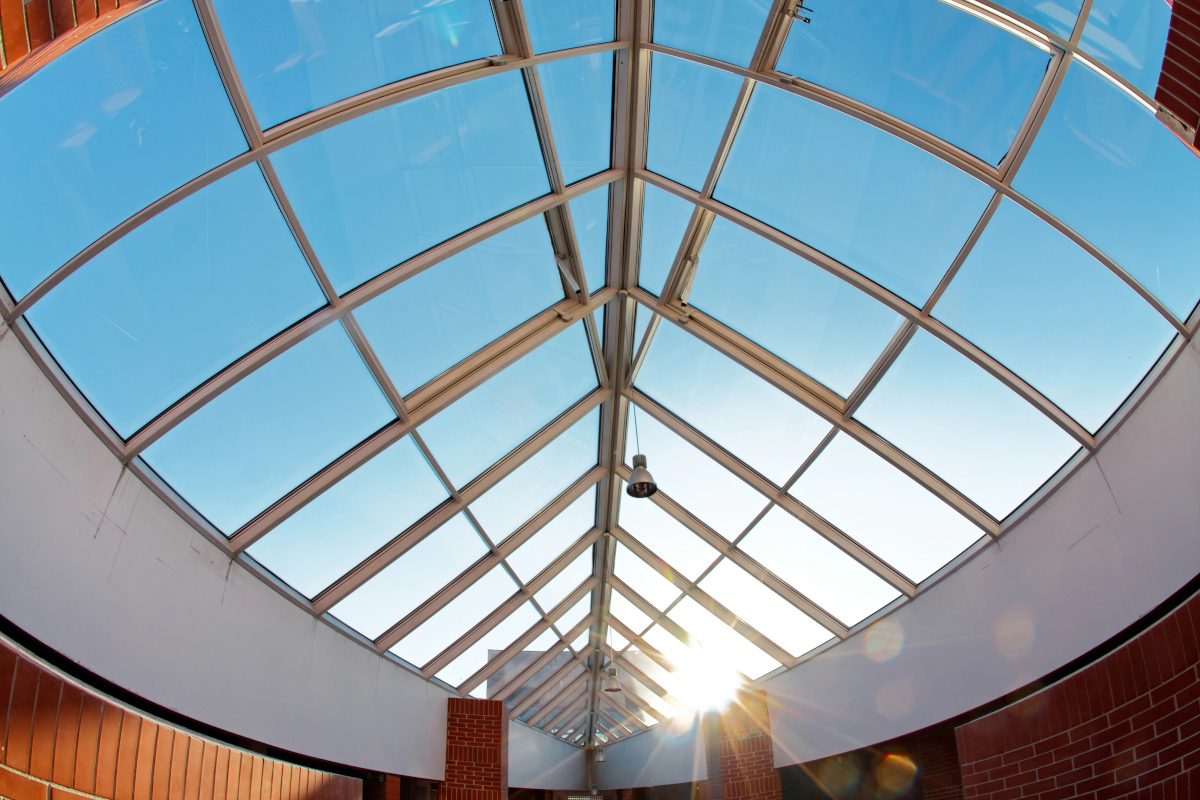
One of the most underestimated aspects of a productive workplace environment is natural light and how glazing helps make that more achievable. With spring now upon us, it’s only prudent that this be discussed.
The importance of natural light in offices
The human body is designed to respond to daylight, with our circadian rhythm (the internal biological clock that governs sleep, energy and mood) relying on exposure to sunlight to function properly. In office environments, where there’s more artificial than natural light, that rhythm is profusely disrupted.
Research continuously suggests that poor light quality is linked to eye strain, fatigue, lower concentration, and an overall dip in performance throughout the working day. For employers, not just in East Lancashire but everywhere, this carries immense risk. Tired, strained and struggling employees may be inclined to take more sick days, prone to errors, and likely to seek roles elsewhere.
For companies in sectors where staff retention is a particularly pressing challenge, the quality of the working environment has become an influential factor. That said, the good news is that East Lancashire is full of contemporary units where local businesses can hit the ground running, operating out of premises where natural light is no stranger.
How architectural glazing influences light exposure
The term “architectural glazing” covers a broad range of systems, from fixed glass walls and partitions, skylights and rooflights to secured, bolt-fixed facades, glass balustrades, all of which are inherently designed to encourage the flow of natural light indoors. The sheer range of solutions is big enough to give discerning SME owners ample choice when upgrading their office space to allow for more natural light exposure.
For businesses considering a refurbishment or fit-out, it is worth understanding what is possible before committing to a specification. Radii Planet Group, a specialist in architectural glazing, has published a detailed knowledge hub introduction to architectural glazing that covers the full spectrum of system types. This should serve as a useful starting reference point for any business owner keen on exploring their options from the outset.
Glazing decisions are often seen as a purely aesthetic design choice, but they can greatly contribute to a better and more productive and enriching environment for employees. A solid internal partition replaced with a glass wall system allows daylight to penetrate further into the building. Similarly, meeting rooms, breakout areas or communal spaces previously dependent on strip lighting, benefit from exposure to natural light, creating a corresponding improved atmosphere within the workspace.
Examples of thoughtful glazing inclusion
For Lancashire’s converted industrial buildings, such as former textile mills with large windows across the preliminary floor(s), modern glazing refurbishments can still honour this heritage look. Contemporary commercial buildings can benefit from curtain wall and floor-to-ceiling glazing systems, where a run-of-the-mill office can be inundated with light. Older industrial buildings may not have as easy a task, but rooflights and internal glass partitioning can deliver the same benefits without compromising the character, charm, and visual consistency of the original structure.
One fervent concern with increasing the glazed area of any building is the risk of overheating in summer, or disrupting glare on screens, which is completely valid. Contemporary glazing technology is, however, innovative, and most now come with coatings and laminated glass that can manage solar gain while maintaining the desired light transmission performance. Increasing natural light and maintaining a comfortable indoor working temperature are, therefore, both equally achievable simultaneously, and one shouldn’t need to be inherently sacrificed in favour of the other.
Psychological and mental benefits
As well as reducing eye strain, natural light delivers numerous psychological benefits. Exposure to daylight can improve your mood, support vitamin D intake, and help to maintain steady energy for manageable concentration.
For SMEs, the role of the physical workspace in supporting employee requirements has never been more important. The WELL Building Standard, a globally recognised framework for assessing built environments’ propensity for improving health, places light in the centre of its core concepts.
There’s reason to believe that workers learn, think creatively and are more productive when they’re working somewhere with plenty of natural daylight. This isn’t just anecdotal; London-based office experts Us&Co, have highlighted research showing that productivity and performance can jump by 5 to 40% in environments with ample natural light. This significant uptick is hard to overlook.
View glazing and light exposure as more than functional
If your Lancashire SME could be due a refurbishment or fresh premises, it’s worth reframing glazing decisions alongside other investments in your staff. A thoughtful office design, with clever glazing and plenty of natural light, can be convincing tools for improving retention and performance, in the same way that training budgets and flexible working policies can.
In a region with as much architectural character and variety as East Lancashire, the opportunity to marry the two is profound. The businesses that prioritise and think carefully about the environments they ask their committed, driven people to work in will be in a better position to attract and retain them for far longer.
For more member news, click here.